Wetland Landscapes
The Quiet Renewal of Nature
By Artist Jill Chronister
Mural Location: Highlands Park| 245 S. Spring Rd.
Can be found on a stand alone billboard like structure in the parking lot behind the Wetlands boardwalk
Artist Mural Statement
My mural honors the relationship between industry, land, and renewal. A brickmaker represents the early labor that helped build the surrounding community. The farm behind him has stood the test of time, enduring through the years. The clay once extracted from this land for brickmaking ultimately reshaped the landscape in an unexpected way. forming the wetlands that thrive there today, alive with plants and wildlife. The mural celebrates the idea that the same land that once fueled industry now nurtures nature and curiosity, reminding us that landscapes and communities continue to grow and renew across generations.

About the Artist
Jill Chronister is a multidisciplinary artist based in Ashland, Ohio, known for blending realism with a touch of whimsy to create murals that spark curiosity, connection, and joy. Working across traditional and digital mediums, Jill specializes in large-scale murals that celebrate community, history, and storytelling.
From corporate installations to charitable projects for children’s hospitals, her work is rich with detail, subtle symbolism, and warmth—inviting viewers to look closer and discover the stories woven into each piece. Through her art, Jill brings imagination to life while honoring the people and places that shape a community.
Learn more about Jill at instagram.com/jillcartist
The History of Westerville's Wetlands
Glaciers once moved across Westerville’s landscape scraping up earth. They deposited soil, water, and minerals when they melted. This sediment was resistant to absorption, creating wetlands.
Settlers, farmers, and developers drained and shaped the landscape, erasing all but three of Westerville’s wetlands:
- Boyer Nature Preserve: 11.5-acre nature preserve with a 3-acre stream-fed pond formed inside a glacial kettle. Kettles are made by ice left by retreating glaciers, which melts and makes a depression.
- Heritage Park: 8.22-acre forested wetland. This was home to brick/tile makers in the late 1800s to early 1900s. Painted turtles, northern water snakes, blue-winged teal, and five amphibian species live here.
- Highlands Park: forested wetland, drained for farming, and returned to wetlands. Scattered open water areas trap stormwater and suspended sediments, creating a rich cattail marsh habitat for amphibians, birds, dragonflies, insects, and plants.
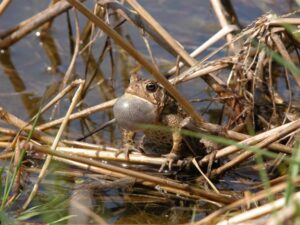
Heritage Park, date unknown
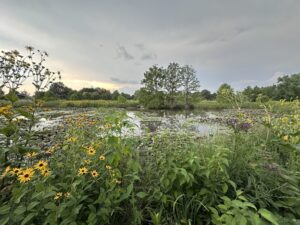
Highlands Park, date unknown
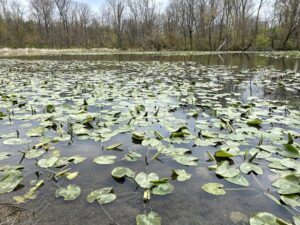
Boyer Nature Preserve, date unknown