A Citywide Canvas of Under told Stories: Exploring Westerville Through the America250 Mural Project
Something meaningful is taking shape across Westerville—and it’s inviting you to see the city in a whole new way.
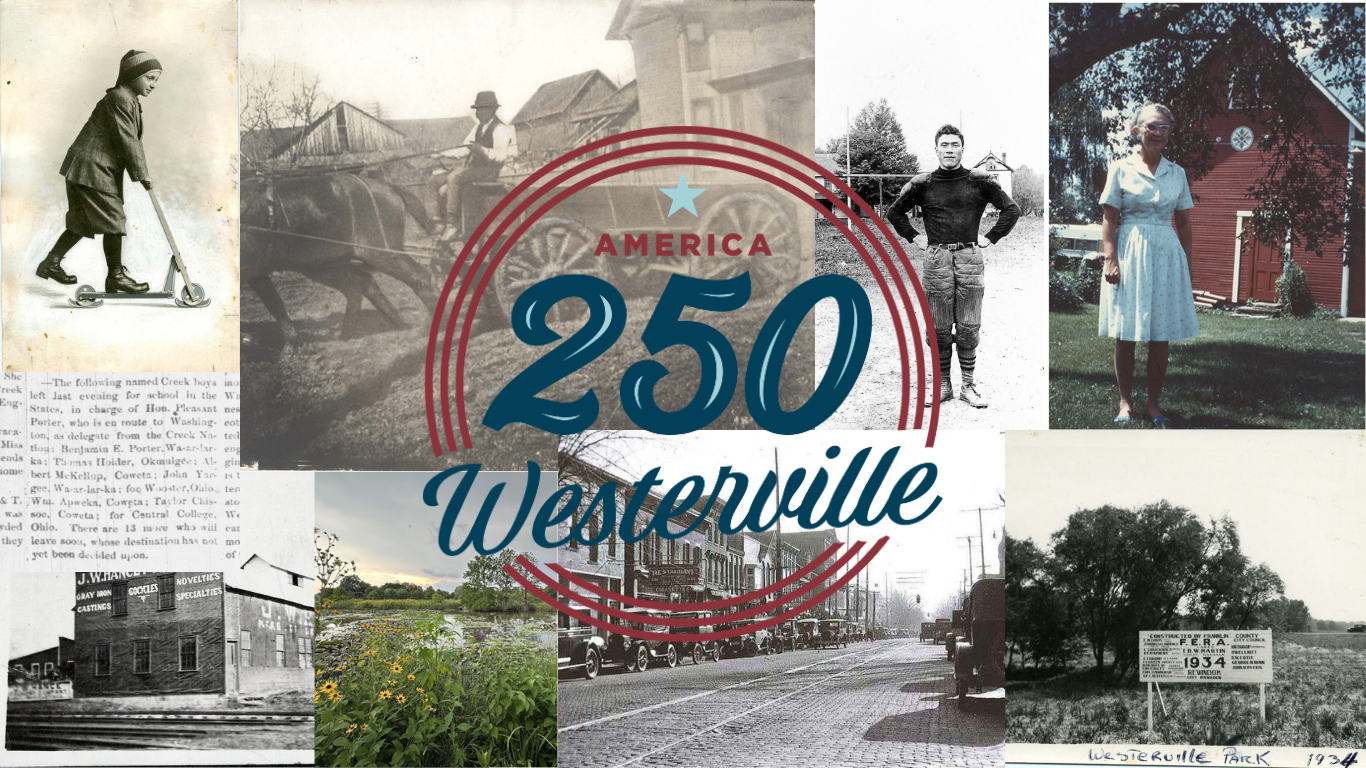
The America250 Westerville Mural Project transforms everyday spaces into a citywide public art experience, bringing 12 large-scale, vinyl murals to life across the community. Each installation is rooted in an under told chapter of Westerville’s history—stories that go beyond the familiar and reflect the people, places, and perspectives that have shaped the city over time.
Together, these murals create a connected journey—one that encourages visitors to explore, discover, and engage with Westerville through stories that may not always be in the spotlight, but are essential to understanding its full story.
The Stories Behind the Murals
Each mural draws from a specific moment, place, or group that helped shape Westerville—often in ways that aren’t widely known. These stories bring that deeper history into view.
Amalthea & Central College
Before Westerville was formally established, the area was home to early institutions that shaped both education and community life. Central College—originally the Blendon Young Men’s Seminary—was founded in the 1800s and later became what is now Otterbein University. Nearby, the community of Amalthea played a role in this early settlement pattern, representing a time when education, faith, and small rural communities were deeply intertwined.
Muscogee Nation Students
In the late 19th century, students from the Muscogee (Creek) Nation traveled far from their homes to attend school in Westerville. Their presence reflects a broader national story—one tied to federal Indian education policies and the displacement of Native communities. This chapter of Westerville’s history is often overlooked, yet it speaks to resilience, identity, and the complicated intersections of culture and education during that era.
Fairs, Festivals & Amusement Parks
Long before today’s events filled Uptown streets, Westerville was home to fairgrounds, gatherings, and early forms of entertainment that brought the community together. These events weren’t just recreation—they were central to social life, agriculture, and commerce. Over time, they evolved into the festivals and traditions that continue today, showing how shared experiences have always played a role in shaping the city’s identity.
Agricultural Foundations
Westerville’s earliest growth was rooted in agriculture. Fertile land, access to water, and a strong farming community made it a hub for crops, livestock, and trade. Farms and orchards once defined much of the landscape, supporting both the local economy and daily life. This mural reflects that agricultural legacy—the foundation on which the city was built.
State Street on the Move
Transportation has always shaped how Westerville connects to the region. In its earliest days, a plank road linked the community to Columbus, followed later by streetcars that ran through town in the late 1800s. Today, State Street (State Route 3) remains a defining corridor, carrying forward a long history of movement, commerce, and connection that helped Westerville grow and evolve.
Black Veterans
The contributions of Black veterans are an essential part of Westerville’s history—yet their stories have not always been fully recognized. From early American conflicts through modern service, Black servicemen and women have demonstrated courage and commitment while often facing inequality at home. This mural brings those stories forward, honoring lives of service and the lasting impact they’ve had on the community.
Wetland Landscapes
Westerville’s natural environment has always played a defining role in its development. Situated near waterways like Alum Creek and surrounded by wetland ecosystems, the area supported early settlement, agriculture, and wildlife. These landscapes are more than scenery—they are part of the city’s identity, shaping how people lived, worked, and connected to the land over time.
Good Citizens
Not all history is defined by major events—much of it is shaped by individuals who quietly made a difference. Westerville’s story includes countless residents who led, volunteered, advocated, and contributed to the community in meaningful ways. This mural highlights that collective impact—recognizing that the character of a city is built through the actions of its people.
Fun Makers
Westerville’s connection to games and play is rooted in creativity and innovation. In the early 20th century, local manufacturers helped shape the toy and recreation industry, producing games that reached homes well beyond the community. This legacy reflects a spirit of imagination—where play wasn’t just entertainment, but part of how ideas and industries took shape.
Westerville’s First Park
Westerville’s identity as a “City in a Park” didn’t happen overnight. It began with the establishment of its earliest public green spaces—places designed for gathering, leisure, and connection to nature. Over time, that commitment expanded into the extensive park system seen today, rooted in the belief that access to green space is essential to community life.
Otterbein Women in the Arts
Otterbein University has long been a center for artistic expression, and women have played a significant role in shaping that legacy. From early educators and performers to influential artists, their contributions helped define both the university’s identity and Westerville’s broader cultural landscape. This mural reflects that creative influence—highlighting voices that helped shape the arts in the community.
Albert Exendine
Albert Exendine, a Native American athlete, coach, and attorney, is one of Westerville’s most notable yet often under-recognized figures. During his time at Otterbein, he excelled in athletics before going on to a distinguished career in law. His story represents perseverance, achievement, and the broader presence of Native American leadership within Westerville’s history.
Turn Your Visit Into an Experience
This isn’t just a series of murals—it’s an invitation to explore Westerville in a new, interactive way.
As you move through the city, each mural becomes a stop along a larger journey—connecting neighborhoods, parks, and gathering spaces through a shared story.
Make it a full experience with the America250 Westerville Digital Mural Trail:
- Check in at each mural location using your phone
- Track your progress as you explore the city
- Complete the trail for a chance to win prizes
Whether you visit one mural or all twelve, the trail adds an interactive layer that brings the citywide canvas to life.
Start here: Westerville America 250 Mural Trail
Be There for the Kickoff
The full experience officially begins on June 26 during the Fourth Friday Festival.
Join us from 6–9 PM on the Hanby Elementary lawn as the America250 Westerville Mural Project comes to life.
You can:
- Get a first look at the murals and the stories behind them
- Explore the Digital Mural Trail at launch
- Pick up your America250 Westerville Guide
- Enjoy interactive, family-friendly activities
- Connect with local partners and organizations
- Grab free frozen yogurt from Orange Leaf Frozen Yogurt while supplies last
It’s your opportunity to step into the experience from the very beginning—and see how a citywide canvas comes together.
Start Your Journey
From historic corridors and campus landmarks to parks and public spaces, the America250 Westerville Mural Project invites you to experience the city one story at a time.
Explore the murals. Follow the trail. Discover something new with every stop.
Plan your route, track your progress, and experience the full citywide canvas.